DOOH is what happens when outdoor advertising caught up with digital. Same physical screens in public spaces, but now they change in real time, respond to context, and can actually be measured. Global DOOH ad spend hit $25.5 billion in 2025, now 47% of all outdoor advertising and on track to overtake static formats for the first time. The basics are straightforward. The programmatic layer is where it gets complicated, and where most campaigns leave money on the table.
What Is DOOH Advertising?
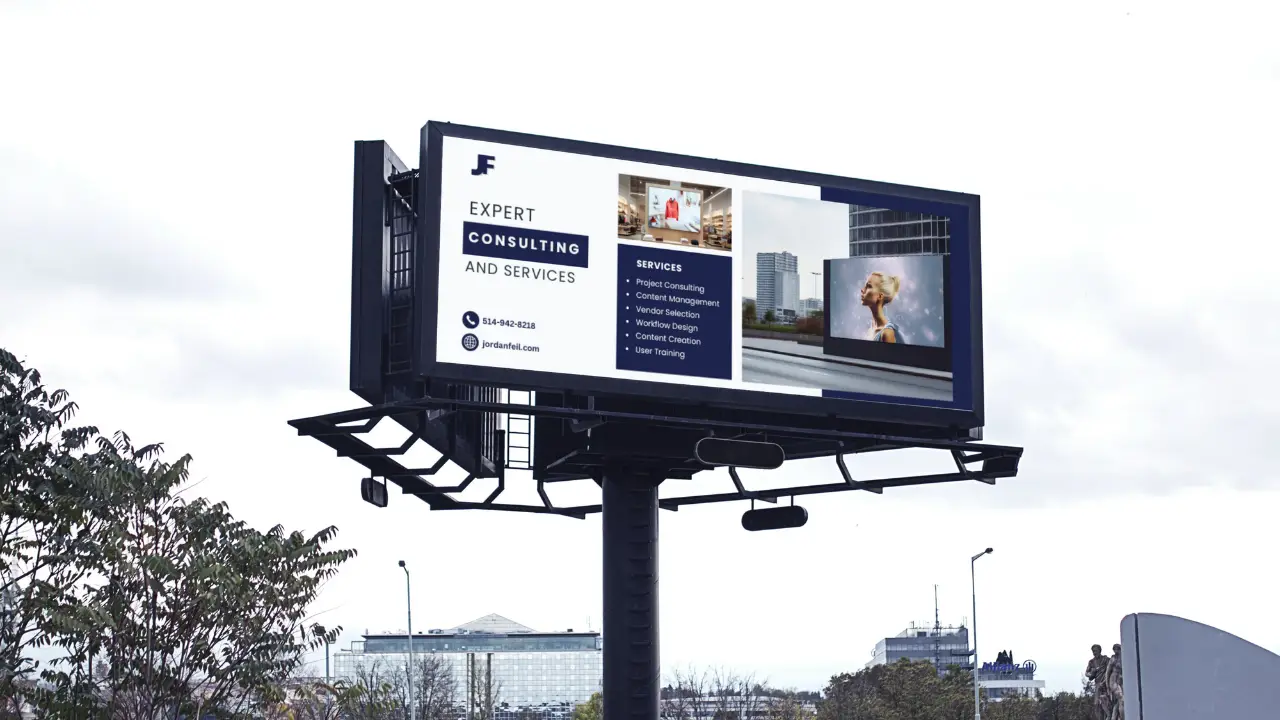
DOOH stands for Digital Out-of-Home. It's outdoor advertising with digital screens instead of printed posters, which sounds like a small upgrade until you understand what that actually unlocks. The content can change in real time. One screen can serve multiple advertisers throughout the day. Weather shifts, the ad shifts. Stock runs out, the promotion pauses automatically. None of that was possible when the medium was ink on paper.
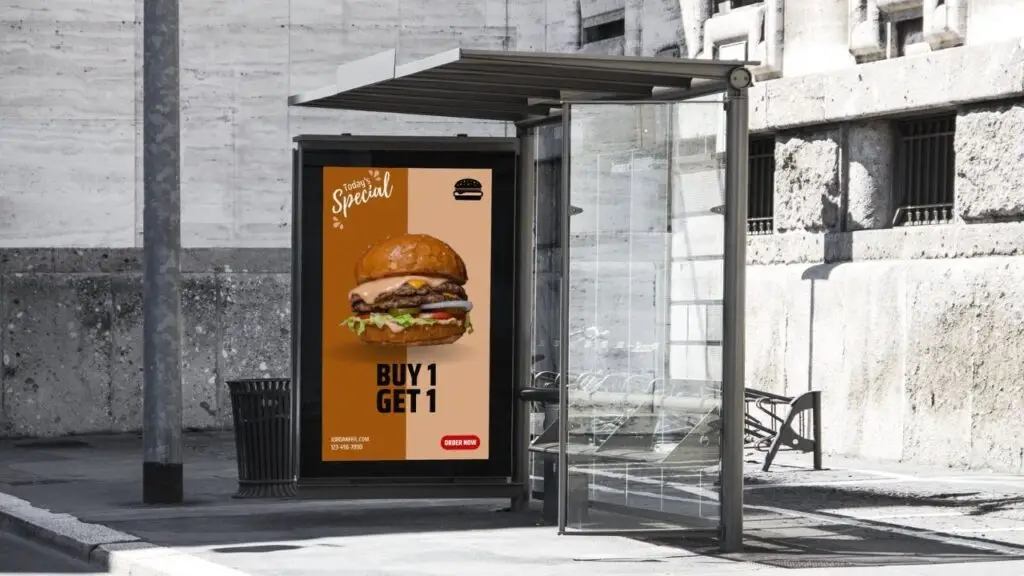
The format shows up everywhere you'd expect outdoor advertising and plenty of places you might not. Airports, transit stations, shopping malls, gyms, elevators, highway billboards, bus shelters, gas stations, office lobbies. The common thread: a digital screen in a public space reaching people while they're out in the world, not sitting at a desk or staring at a phone.
The flexibility is what changed the economics. A traditional billboard requires printing and installation every time the message changes. A DOOH screen updates remotely, rotates through dozens of creatives in a day, and reacts to context without anyone touching the physical hardware. That's what moved outdoor from a brand-awareness-only channel into something that can drive results you can actually point to.
For brands used to the targeting precision of digital marketing, DOOH is the bridge to the physical world. Real-world reach with data-driven buying, contextual targeting, and mid-flight optimization. The billboard that adapts instead of just sitting there.
If you are responsible for the physical display infrastructure rather than the advertising side, the outdoor digital signage guide covers hardware selection, weatherproofing, and installation for operators managing outdoor screen networks.
How DOOH Works
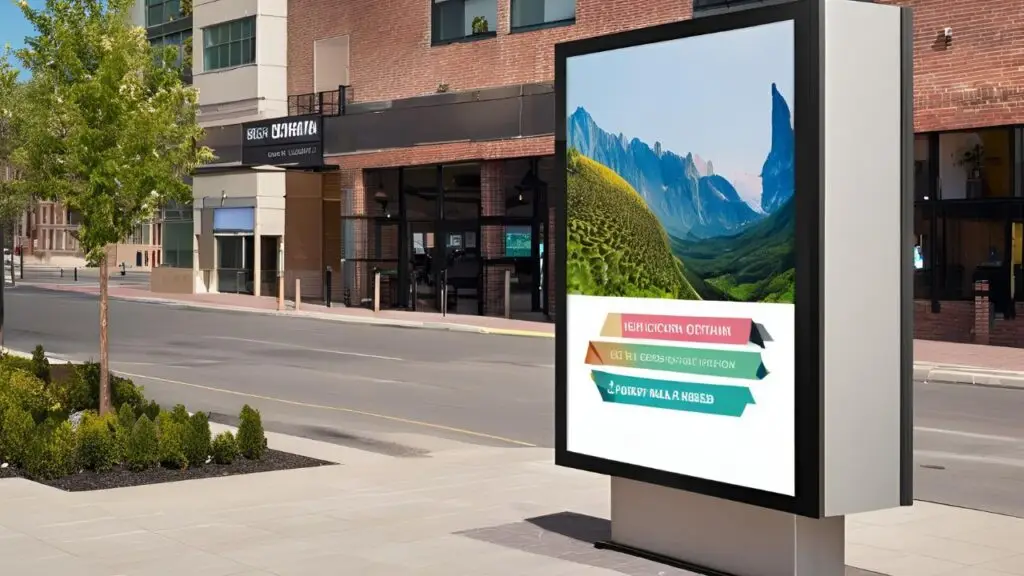
Three pieces make the DOOH ecosystem work. You can interact with each layer separately, but they have to connect cleanly for programmatic buying to actually function.
Screens (Inventory)
The physical displays are the foundation. These range from massive highway digital billboards to small screens in elevator cabs. Screen owners like Clear Channel, Lamar, JCDecaux, and OUTFRONT Media manage networks of displays across different venue types. Each screen has specific attributes that matter to advertisers: location, audience profile, daily traffic volume, dwell time, and screen format.
Ad Servers and CMS Platforms
Behind every DOOH screen is a content management system that controls what plays, when it plays, and for how long. These platforms handle scheduling, content distribution, and playback verification. They connect to the physical displays through media players and ensure the right creative appears at the right time based on the campaign parameters.
Buying Platforms
This is where advertisers and agencies purchase screen time. The buying side has evolved significantly over the past five years, moving from phone calls and insertion orders to software-driven purchasing. Today, there are two primary approaches: direct buying (negotiating with screen owners for specific locations and time slots) and programmatic buying (using automated platforms to purchase inventory based on data and targeting parameters). The programmatic side has become sophisticated enough to deserve its own deep dive, which we cover below. New to the terminology? The digital signage glossary covers DSPs, SSPs, proof of play, and 100+ other industry terms in plain English.
Where DOOH Ads Show Up
DOOH inventory extends far beyond the highway billboard most people picture when they think of outdoor advertising. The channel has expanded into nearly every type of public venue, each with different audience profiles and engagement characteristics.
Transit Hubs
Airports, train stations, bus terminals, and subway platforms. High foot traffic with captive audiences and extended dwell times, especially in departure lounges and boarding areas.
Retail Spaces
Supermarkets, shopping malls, convenience stores, and pharmacy chains. Screens positioned near the point of purchase drive immediate action and influence buying decisions in real time.
Hospitality
Hotels, restaurants, bars, and drive-thru locations. Audiences in a spending mindset with higher engagement rates on promotions and local recommendations.
Corporate & Healthcare
Office elevator screens, building lobbies, medical waiting rooms, and clinic check-in areas. Professional audiences with predictable daily patterns and longer attention windows.
Campus & Events
Stadiums, arenas, university campuses, and convention centers. High-energy environments with concentrated demographics and strong contextual targeting opportunities.
Each venue type comes with different strengths. Transit screens offer massive daily reach. Retail screens drive point-of-sale influence. Office screens reach a professional demographic with consistent daily exposure. The best DOOH campaigns match venue selection to the specific audience and action they want to drive, rather than chasing raw impression volume across every available screen.
DOOH vs. Traditional OOH
The gap between digital and traditional outdoor advertising continues to widen. Here is how the two approaches compare across every dimension that matters to media buyers.
| Factor | Traditional OOH | DOOH |
|---|---|---|
| Content | Static for weeks | Changes in real time |
| Scheduling | Fixed 4-week blocks | Flexible, daypart, or trigger-based |
| Targeting | Mass audience | Specific segments by location, time, context |
| Buying | Manual insertion orders | Automated algorithmic bidding |
| Measurement | Basic traffic counts | Audience data, lift studies, attribution |
| Minimum Spend | Often large commitments | Can start smaller with RTB |
The 47% digital share tells the story. A few years ago it was under a third of all outdoor spend. That's not organic drift, that's an industry converting fast, driven by advertisers who spent years complaining that outdoor was unmeasurable and now finally have what they asked for. The 67% planning to increase budgets is the market confirming which direction things are headed.
Market Statistics
The numbers tell a clear story. DOOH is growing faster than almost any other advertising channel, and the shift from static to digital is accelerating.
| Metric | Value |
|---|---|
| Global DOOH ad spend (2025) | $25.5 billion |
| Total OOH ad spend (2025) | $54.2 billion |
| Digital share of OOH spending | 47% |
| Static-to-digital conversion | 35% |
| Average daily exposure | 17 minutes |
| Buyers increasing budgets | 67% |
| Programmatic DOOH CPM range | $6 to $24 |
| Performance vs. static outdoor | 2.8x better results |
A 2.8x improvement over static outdoor sounds like a headline number. The small print: those results assume your data infrastructure is actually connected, not just theoretically compatible. The 24 to 38% sales lifts you see in case studies come from networks with real loyalty data feeds, clean inventory integration, and someone who did the unglamorous setup work. Skip that groundwork and expect average results.
Creative and Targeting
Social media and DOOH have opposite creative rules. Social rewards nuance, time, and interaction. DOOH rewards clarity, scale, and three seconds of attention from someone who may not have even stopped walking yet. The brands that treat them as the same medium consistently underperform the ones that don't.
- One core message per creative. You have 3 to 5 seconds of attention. A single clear idea beats a screen full of information every time.
- Big, high-contrast text. If it cannot be read from 30 feet away in bright daylight, it is too small or too subtle.
- Clear branding with short CTAs. Logo visible at a glance. Call-to-action that can be processed instantly: a URL, a QR code, or a simple directive.
- Motion that attracts without distracting. Subtle animation draws the eye. Full video production with complex narratives gets ignored because people catch it mid-story and move on.
- 8 to 10 second messaging windows. Design for this viewing duration. Bold visuals, large type, and a single takeaway. Web banners shrunk to billboard size are not DOOH creative.
Contextual Triggers
Where DOOH really separates itself from static outdoor is in contextual targeting, the ability to change what appears on screen based on real-world conditions. This is where campaigns go from good to great.
- Time-based: Coffee ads during the morning commute, lunch specials at noon, happy hour promotions at 4 PM. Dayparting lets you match the message to the moment.
- Weather-responsive: Sunscreen ads when the UV index spikes. Hot soup promotions when temperatures drop. Umbrella retailers targeting screens near transit stops during rain forecasts.
- Location-specific: Messaging tailored to the neighborhood, venue type, or proximity to a store location. A restaurant chain can promote the nearest location with walking directions.
- Event-driven: Campaigns tied to sporting events, concerts, conferences, or cultural moments happening near specific screens.
- Inventory-driven: Retail brands can pause ads automatically when a promoted product goes out of stock, then reactivate when inventory is replenished. This requires clean data integration between the inventory system and the DSP.
The combination of strong creative fundamentals and smart contextual triggers is what makes DOOH campaigns perform. A well-designed ad shown at the right moment in the right context consistently outperforms generic creative running on a fixed schedule. For more on building effective digital signage content, the same principles apply whether you are running advertising or owned media.
Programmatic DOOH: The Complete Breakdown
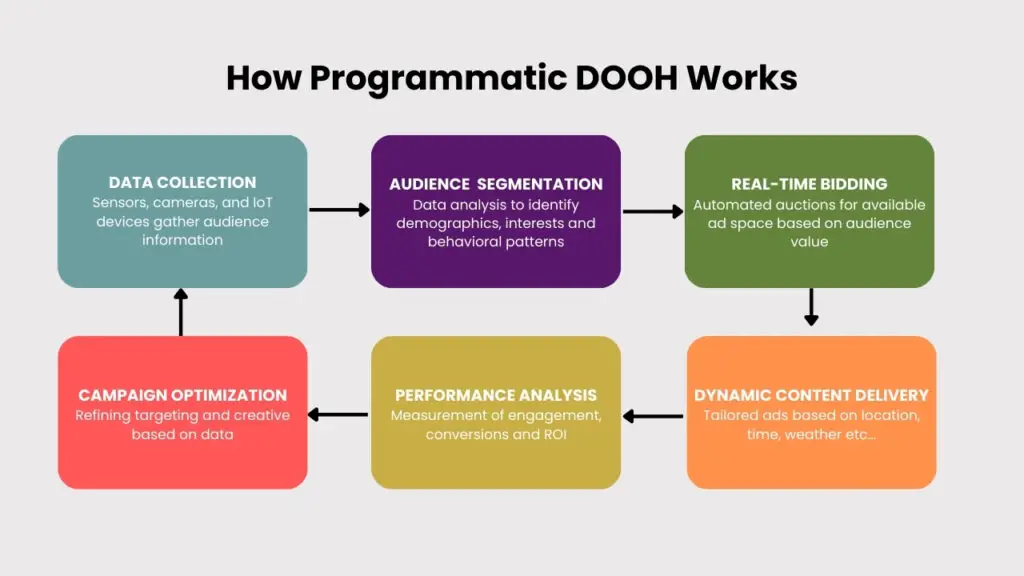
The old DOOH buying process: call a rep, negotiate rates, sign an insertion order, and wait weeks to see if anything ran correctly. Programmatic replaced most of that with software. Set your targeting parameters, define your budget, load your creative, and the platform handles inventory sourcing, bidding, scheduling, and mid-flight optimization automatically. Same screens, completely different infrastructure.
The core advantage is relevance at scale. A coffee brand can target rainy mornings near transit stations. A retailer can pause ads when a product goes out of stock. A QSR chain can push lunch specials at 11 a.m. and desserts at 2 p.m., all automatically. The same context-aware playback drives in-store networks too, where digital menu boards change pricing and promotions based on time of day, inventory, and location. The technology makes this possible. Strategy makes it worth doing.
The parameters you define typically include audience type (who you want to reach), budget (how much you want to spend), flight dates (when the campaign runs), and contextual triggers (conditions that activate or adjust the campaign). The buying platform matches those parameters against available screen inventory and executes the campaign automatically.
How Programmatic DOOH Works: The Technology Stack
Four pieces need to connect for programmatic DOOH to function. Here is what each one does and why it matters.
Demand-Side Platforms (DSPs)
Software used by advertisers and agencies to buy ad inventory. Set targeting parameters, define bid ranges, and manage campaigns across multiple screens and publishers from a single interface.
Supply-Side Platforms (SSPs)
Software used by screen owners and networks to make inventory available to multiple buyers simultaneously. Manage floor pricing, deal structures, and yield optimization.
Ad Exchanges
The matching layer connecting buyers (DSPs) with sellers (SSPs) in real-time transactions. Runs the auction, settles the transaction, and routes creative to the right screen at the right time.
Data Feeds & DMPs
Data Management Platforms pull in external signals: weather feeds, traffic data, mobile location data, retail foot traffic, and audience demographics. Enables contextual and audience-based targeting.
Programmatic Buying Models
Not all programmatic buying is the same. Four models cover the spectrum from fully open to fully reserved, and most mature strategies use a mix of all four.
| Buying Model | How It Works |
|---|---|
| Real-Time Bidding (RTB) | Open auction for available inventory. Maximum flexibility. Best for broad reach and testing new markets with smaller budgets. |
| Programmatic Guaranteed | Fixed price, reserved inventory. Premium locations without auction risk. You know exactly where and when your ads will run. |
| Private Marketplace (PMP) | Invite-only curated auction. Brand safety and access to premium screen networks at negotiated rates. |
| Automated Direct | Pre-negotiated deals executed automatically through the platform. Predictable, low-risk, and suitable for anchor locations where presence is non-negotiable. |
RTB works well for broad awareness and budget-conscious testing. PMP deals give you access to premium placements with better inventory quality. Programmatic guaranteed secures anchor locations. The right mix depends on your objectives: a brand launching in a new market might lean heavily on RTB for reach, while an established retailer might use programmatic guaranteed for flagship store locations and RTB for expansion markets.
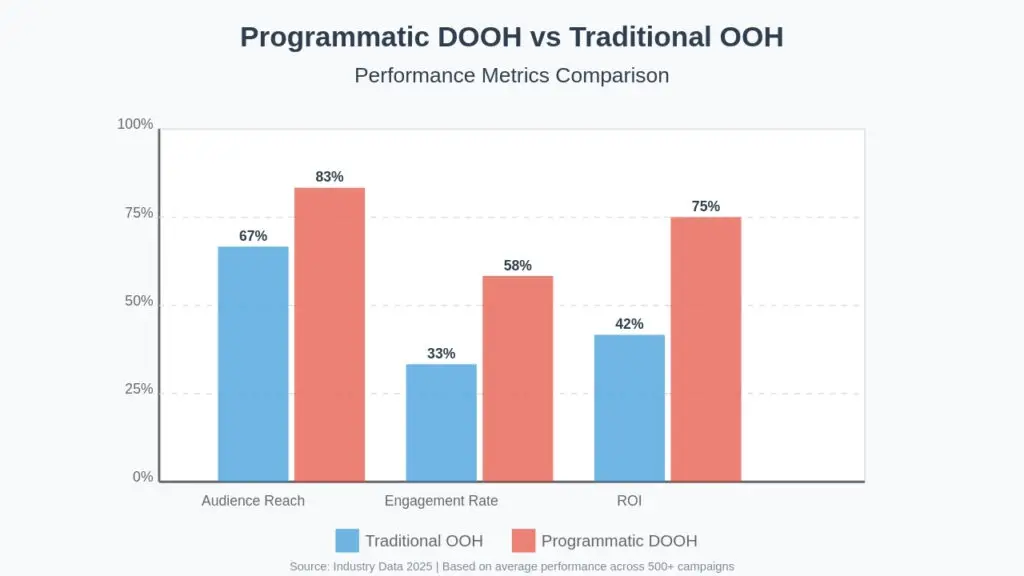
Programmatic DOOH Performance Data
The performance numbers are strong when the infrastructure is set up correctly.
The 2.8x figure reflects the relevance advantage of data-driven targeting and creative. The 24 to 38% sales lift requires actual data integration between the inventory system, loyalty program, and DSP. Networks running generic creative without real data see significantly lower results. The CPM range varies widely by venue type, targeting specificity, and buying model, with open RTB on standard screens at the low end and private marketplace deals on premium airport or transit inventory at the high end.
Field Reality: What Case Studies Leave Out
The programmatic DOOH landscape is full of impressive case studies. Most of them skip where things went wrong first.
The biggest disconnect is between marketing expectations and operational reality. Marketing wants RTB and dynamic content. IT is worried about network security. Operations is concerned about content approval workflow collapse. All three concerns are legitimate, and ignoring any of them leads to deployment problems.
- Broken inventory data feeds leading to active promotions for out-of-stock products. One retail client ran a promotion on a product that sold out the previous day because the data pipe between inventory and the DSP had a 48-hour lag.
- Screens going dark during peak hours because floor pricing was not set correctly, leaving inventory unsold rather than backfilling with house content.
- Creative built for web formats failing on 10-foot screens. Web banners are not DOOH creative. Bold visuals, large type, and 8 to 10 second messaging windows require a fundamentally different design approach.
- Delayed measurement implementation. Setting up attribution and tracking after the campaign launches means you lose data from the most valuable early period. Build measurement into the plan from day one. For the broader framework on translating these metrics into a defensible business case, see the digital signage ROI guide.
Recommendation: Pilot with 10 to 20% of inventory first. Test data pipes before anything goes live at scale. Build confidence in floor pricing before opening the full exchange. Then scale based on what you learn.

Programmatic DOOH Best Practices
Define the Goal Before Selecting the Platform
Brand awareness, foot traffic, and direct sales lift require different buying strategies, creative approaches, and measurement frameworks. Choosing a DSP before defining the objective is backwards. Start with the business outcome you need, then select the technology that supports it.
Choose Compatible Technology Partners
DSP and SSP combinations need to integrate cleanly with existing marketing technology and CRM systems. A technically superior platform that does not connect to your loyalty data or inventory system is less useful than a simpler one that does. Evaluate based on integration capability, not feature lists.
Design for the Format
This cannot be overstated: DOOH creative is not digital display creative repurposed for a bigger screen. Keep messaging simple. Large, bold visuals. One clear message. 8 to 10 seconds viewing time, often from a moving audience. Weather-triggered and time-triggered creative can improve relevance, but only if the fundamentals are right first.
Measure in Phases
Months 1 to 3: Focus on operational metrics like fill rates, CPM trends, creative approval speed, and data feed reliability. Months 4 and beyond: Measure business impact through sales lift, foot traffic attribution, and brand awareness studies once the system is stable and data is trustworthy.
Start Small, Scale With Data
The practical benefit of programmatic buying is that it removes the barriers that kept smaller advertisers out of outdoor media. You no longer need a six-figure budget or a three-month lead time. Launch with a modest budget, test a handful of screen locations, optimize based on performance data, and scale what works. This is the same workflow that made digital advertising accessible to brands of every size, now applied to physical screens.
Regional Grocery Chain: Weather-Triggered Creative
A regional grocery chain with 7 locations deployed weather-triggered creative: soup promotions during cold weather, salad promotions during warm weather, combined with time-based pricing for produce near end of day.
The key enabler was clean data integration between the weather feed, inventory system, and DSP. Without that, creative would have been generic and results unremarkable.
Measuring DOOH Performance
Measurement has always been the objection against outdoor advertising. For decades, advertisers relied on traffic counts and estimated impressions with no real way to connect a billboard to a business outcome. DOOH has changed that significantly, not perfectly, but enough to make the channel accountable in ways that static outdoor never was.
The IAB has established standard metrics for DOOH campaigns that most platforms now support, providing a useful framework for understanding how impressions and attribution should be calculated across different screen networks.
Core Metrics
- Plays and impressions: How many times your ad appeared and the estimated number of people who had the opportunity to see it. Impressions in DOOH are modeled based on venue traffic data, screen visibility, and dwell patterns.
- Reach and frequency: How many unique individuals saw your campaign and how many times on average they were exposed. Mobile location data makes these estimates more accurate than traditional outdoor methods.
- Attribution: Connecting ad exposure to downstream actions like store visits, website traffic, app downloads, or purchases. This typically works through mobile device matching, comparing the movement patterns of exposed audiences against control groups.
- Engagement proxies: Direct response signals like QR code scans, short URL visits, app installs from campaign-specific landing pages, and coupon redemptions tied to DOOH placements.
- Proof of play: Verification that your ads actually ran as scheduled. The platform confirms each play occurred on the correct screen at the correct time, providing an audit trail that static outdoor cannot match.
- Brand lift studies: Surveys measuring awareness, consideration, and intent among exposed audiences versus control groups. These provide a higher-level view of campaign impact beyond direct response metrics.
- Sales lift analysis: Using point-of-sale or loyalty data (where integration is available) to measure the direct revenue impact of DOOH exposure on purchasing behavior.
Setting Up Measurement Right
The measurement is not as precise as a click-through on a display ad, but it is dramatically better than the traffic-count estimates that traditional outdoor relied on for decades. The key is setting up your measurement framework before the campaign launches, not after it ends. Define your KPIs, establish baselines, and build tracking into the campaign from day one.
Clean measurement also requires ensuring the data infrastructure is in place to capture the signals you need. If you want to measure sales lift, the loyalty data integration needs to be working before the first ad plays. If you want foot traffic attribution, the mobile data partner needs to be configured during campaign setup. Retroactive measurement rarely captures the full picture.
DOOH Trends Shaping 2026
The DOOH industry is evolving fast. Here are the trends shaping where the channel is headed and what they mean for advertisers planning campaigns in the near term.
AI-Driven Creative Adaptation
Machine learning is moving beyond basic optimization into real-time creative adaptation. Ads that adjust messaging, visuals, and offers based on context without manual creative production are becoming standard. AI tools are also reducing production costs by generating multiple creative variations for contextual campaigns.
Retail Media Expansion
Retail media networks are adding in-store digital screens to their programmatic offerings. This connects DOOH to the fastest-growing segment of advertising, letting brands reach shoppers at the point of purchase with the same targeting and measurement tools used for online retail media. If you own the screens rather than buy them, the sell-side view is here.
Privacy-Safe Targeting
As mobile location data tightens under regulation, presence sensors and first-party data from loyalty programs are filling the gap. The shift toward privacy-safe signals is actually improving data quality for advertisers willing to invest in first-party integrations.
Closed-Loop Measurement
The industry is moving toward unified measurement that connects DOOH exposure to online behavior, mobile engagement, and in-store actions within a single attribution framework. Integrated campaigns combining DOOH, mobile, and loyalty data can now measure the full journey from impression to purchase.
Sustainability and Energy Efficiency
Screen networks are investing in lower-power LED technology, solar-powered displays, and carbon-offset programs. Advertisers are increasingly asking about the environmental impact of their media buys, and screen owners are responding with verifiable sustainability metrics. For operators building or managing their own screen networks, the sustainable digital signage guide covers practical steps for reducing energy consumption and lifecycle impact.
Expanded Contextual Triggers
Radar-based presence detection, real-time traffic pattern data, and event calendars are feeding directly into bidding decisions. Dynamic creative optimization is becoming standard, not experimental, driving the next wave of DOOH adoption.
The common thread across all of these trends is that DOOH is becoming more integrated with the broader digital advertising ecosystem. The days of outdoor media operating as a separate, siloed channel are ending. For advertisers, that means DOOH can now fit into cross-channel strategies with the same data, targeting, and measurement standards they expect from every other digital channel.
Getting Started with DOOH
Whether you are new to outdoor advertising or expanding an existing program, here is a practical framework for launching DOOH campaigns that deliver results.
Step 1: Define Your Objective
Brand awareness, foot traffic, direct sales lift, and product launches each require different buying strategies and measurement frameworks. Get specific about what success looks like before you evaluate any technology or screen network.
Step 2: Choose Your Buying Approach
For first-time DOOH advertisers, programmatic RTB offers the lowest barrier to entry. You can test with modest budgets, learn which venues and dayparts perform best, and scale based on data. For brands with specific location requirements, programmatic guaranteed or direct deals with screen owners make more sense.
Step 3: Select Technology Partners
Evaluate DSPs based on the screen networks they can access, the data integrations they support, and how well they connect to your existing marketing stack. The best DSP for a retail brand with loyalty data is different from the best DSP for a B2B advertiser targeting office buildings. Talk to a digital signage consultant if you need help navigating the vendor landscape.
Step 4: Build Creative for the Medium
Produce creative specifically designed for DOOH screens. One message, big text, clear branding. If you plan to use contextual triggers, build the creative variations before launch. Producing weather-responsive or time-based creative after the campaign is live creates unnecessary delays and missed opportunities.
Step 5: Pilot, Measure, Scale
Start with a focused pilot covering a limited number of screens and markets. Set up measurement from day one. Run for enough time to gather statistically meaningful data (typically 4 to 6 weeks minimum). Analyze results, optimize creative and targeting, then expand to additional markets and screen networks based on what the data shows.
Common Pitfalls
Most DOOH campaigns that underperform weren't doomed by the technology or the media buy. They were doomed weeks earlier, when someone handed the agency a web banner and said "just scale it up." The mistakes are consistent enough to be predictable, which means they're also preventable.
- Small or text-heavy designs. If your creative looks like a webpage shrunk to fit a billboard, it will not work. People are moving and have seconds to absorb the message. Strip it down to one idea, big text, and clear branding.
- Identical content loops for extended periods. Running the same creative for weeks without variation leads to audience fatigue and wasted impressions. Rotate creative regularly and use contextual variations to keep the message fresh.
- Ignoring venue context or dwell time. A 5-second creative makes sense for a highway billboard but wastes opportunity in an airport lounge where dwell time is 20 minutes. Match your creative length and depth to the environment.
- Skipping the data infrastructure. Programmatic DOOH without clean data feeds is just automated billboard buying with extra steps. Invest in the data pipes, inventory integrations, and floor pricing before going live at scale.
- Reusing web or social creative. DOOH is a different medium with different rules. The brands that respect those differences and design specifically for the format consistently outperform those that repurpose existing assets.
The pattern I see most often: brand hands the agency a web banner, asks them to make it fit, and is surprised when the campaign underperforms. DOOH is not big-screen display advertising. The brands that accept the format has its own rules, and actually design for them, consistently outperform the ones that don't bother.
Bottom Line
DOOH is not an experiment anymore. Global ad spend has passed $25 billion and is closing in on half of all outdoor advertising, 67% of buyers are increasing budgets, and the channel has finally delivered the targeting, buying flexibility, and measurement that media buyers spent years asking for. The market has already decided.
The programmatic layer removed the barriers that used to keep smaller advertisers out of outdoor. You don't need a six-figure commitment or a three-month lead time to find out if the channel works for your brand. A modest test budget, a clear objective, and data infrastructure that's actually connected is enough to start. The 2.8x improvement and 24 to 38% sales lifts are real numbers, but they're earned, not automatic.
The brands getting the best results treat DOOH as its own medium. One message per creative. Text big enough to absorb at a glance. Contextual triggers that make the ad feel like it belongs in that moment. Measurement set up before the campaign launches, not scrambled together at the end. It's a short list, but most campaigns skip at least two items on it.
If you're new to DOOH, start with RTB, pilot in two or three markets, and let the data tell you what to scale. If you're already buying DOOH, the shift toward AI-driven optimization and closed-loop measurement means the channel is measurably better than it was a year ago, and it keeps improving. The question isn't whether it belongs in the plan. It's how much of the plan it should own.
- DOOH combines outdoor reach with digital precision, contextual targeting, and real-time optimization.
- Programmatic buying (RTB, PMP, guaranteed, automated direct) makes DOOH accessible at any budget level.
- DSPs, SSPs, ad exchanges, and data feeds form the technology stack that powers programmatic DOOH.
- One message per creative with big, high-contrast text works best for the format.
- Use contextual triggers (weather, time, inventory, events) to maximize relevance and performance.
- Measure from day one with clear KPIs, proper data integration, and phased evaluation.
- Pilot with 10 to 20% of inventory, test data pipes, then scale based on results.
- 67% of media buyers are increasing DOOH budgets, and programmatic DOOH delivers 2.8x better results than static.
Further Reading
Jordan Feil is an independent digital signage consultant with 17 years of industry experience. He has worked as a product manager at Navori Labs, a technical account manager, and a global marketing director before founding JAF Digital Consulting. He works with operators, vendors, and integrators on strategy, software selection, network audits, and go-to-market. No commissions, no vendor relationships that shape what he recommends.