Canada's DOOH market is fragmented across three distinct metro areas with different demographics, regulations, and programmatic adoption levels. Toronto leads in inventory, Vancouver has the strongest programmatic infrastructure, and Montreal requires bilingual creative from inception. National campaigns need hybrid buying approaches combining programmatic reach with direct premium placement.
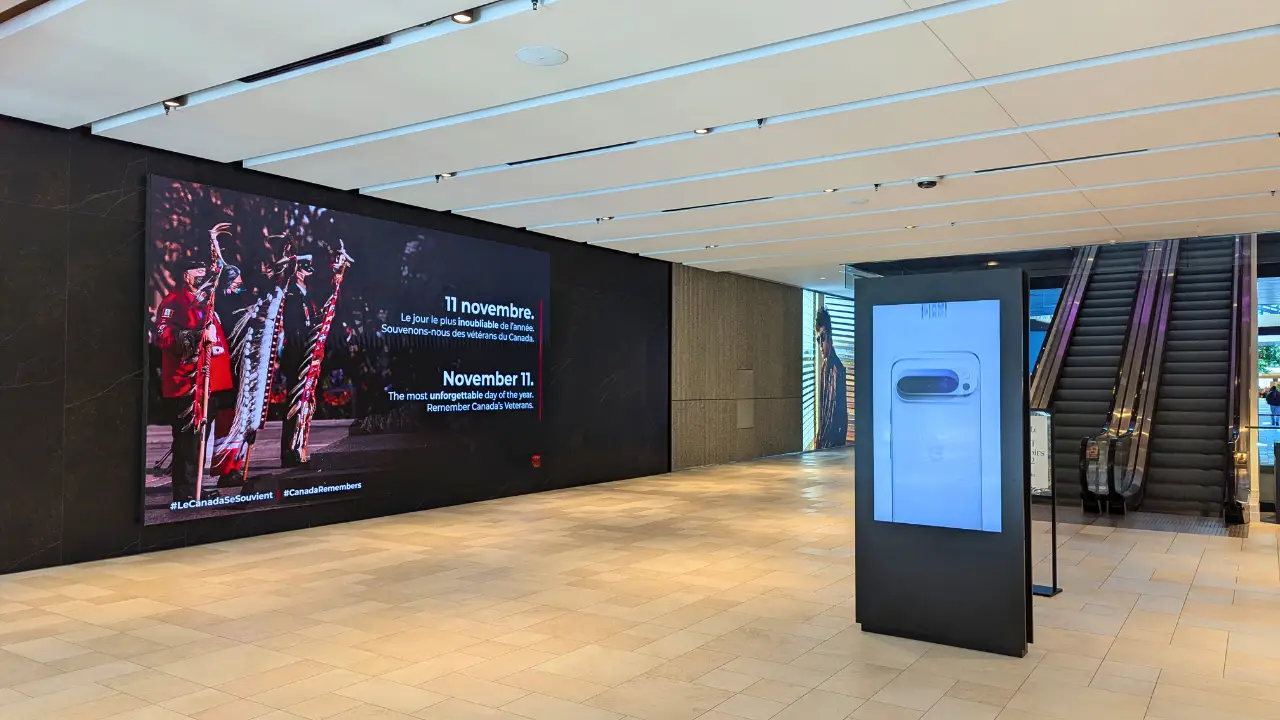
Canada's DOOH Market Is Weird
If you're coming from the U.S. market, Canadian DOOH feels familiar on the surface. Then you start buying and things get weird fast. The tech is the same. The platforms overlap. But the market works totally differently.
Canada has three big metro areas that hold most of the DOOH inventory and ad spend: Toronto, Vancouver, and Montreal. On paper, that sounds manageable. In practice, these three function like different countries. Different dominant screen owners, different programmatic maturity, different commuting patterns, and in Montreal's case, a whole different language rule that goes well beyond running English creative through Google Translate.
National campaigns that treat Canada as a single market consistently flop. The brands that win in Canadian DOOH advertising build separate strategies for each metro and stitch them together after.
Need a primer on how DOOH works in general (screen types, buying models, measurement basics)? Start with the DOOH advertising guide. This post is about what makes the Canadian market different.
Why Canadian DOOH Is Different
Canadian DOOH has real differences that trip up even experienced media buyers. If you're used to U.S. programmatic, this is what catches you off guard.
Market Concentration with Fragmentation
Three metros own the inventory, but each has its own mix of screen owners, transit authorities, and buying habits. What works in Toronto doesn't just translate to Vancouver or Montreal.
Weather Triggers
Canada has real winters, which is actually an advantage. Temperature triggers work. Hot beverage ads when it drops below -10C. Snow tire promos when Environment Canada calls a storm. Weather targeting hits harder here than almost anywhere else.
Uneven Programmatic Adoption
Vancouver has the most mature programmatic DOOH setup. Toronto is catching up fast. Montreal lags, partly because of language and partly because the big local networks have been slow to open programmatic pipes.
Bilingual Requirements
Montreal doesn't just need French translation. It needs French-first creative. Quebec's Charter of the French Language requires French to be at least as prominent as English. Bilingual campaigns that look translated get ignored. The creative has to feel native, not ported.

The Three Markets That Actually Matter
Forget the single national DOOH strategy. The three markets that drive Canadian DOOH each have their own personality, setup, and way buying works.
Toronto
Canada's biggest DOOH market by inventory and spend. TTC subway, GO Transit, and Yonge-Dundas Square are the anchor placements. Heavy competition for premium spots means you book direct for marquee locations and backfill with programmatic for reach.
Vancouver
Transit-heavy market built around the SkyTrain network. Higher programmatic adoption than Toronto, which makes it the easiest Canadian market for automated buying. The audience skews younger and more digital. A strong test market for programmatic-first campaigns.
Montreal
Bilingual market with strict French language rules. You can't just translate English creative and run it here. The French version has to be built from scratch and feel native. STM metro is the key transit placement. Programmatic adoption is growing but still trails Toronto and Vancouver.
The practical upshot: a national Canadian DOOH campaign is really three campaigns running in parallel. Each market needs its own creative, its own buying strategy, and in Montreal's case, its own language team.

Who Actually Owns the Screens
Knowing who owns what matters, because it decides what's on programmatic, what you have to buy direct, and who you're actually negotiating with.
| Company | Strength | Key Inventory | Programmatic Access |
|---|---|---|---|
| Pattison Outdoor | Canada's largest OOH company | National coverage, large-format, transit | Available via major DSPs |
| Outfront Canada | Strong in transit networks | TTC (Toronto), major transit systems | Growing programmatic |
| Astral (Bell Media) | Premium urban and mall placements | Urban centres, shopping malls, airports | Selective programmatic |
| Broadsign | Montreal-based ad tech platform | Powers many Canadian DOOH networks | Core programmatic infrastructure |
Broadsign deserves a callout because it's not just a screen owner. It's a Montreal-based tech company that powers the programmatic backend for many Canadian DOOH networks. If you're buying programmatic DOOH in Canada, there's a good chance Broadsign's tech is somewhere in the chain.
With ownership this concentrated, you're often negotiating with a handful of companies for premium placements. Direct relationships matter here, especially for high-demand locations like Yonge-Dundas Square, SkyTrain, or STM.
How to Actually Buy DOOH in Canada
The Canadian buying landscape is a hybrid. Knowing when to use programmatic versus direct buying is the difference between an efficient campaign and a frustrating one.
Programmatic Buying
Platforms like Broadsign Reach, Hivestack, and Vistar Media let you buy Canadian DOOH inventory through automated systems. You set targeting (audience, geography, time of day, weather triggers) and the platform handles placement across available screens. Programmatic works well for reach-focused campaigns, weather-triggered creative, and multi-market campaigns where you need to manage frequency across all three metros.
The catch: not all premium inventory is on programmatic. High-demand placements like Yonge-Dundas Square in Toronto or key SkyTrain stations in Vancouver are often held for direct deals. If your campaign depends on specific marquee locations, programmatic alone won't get you there.
Direct Deals
Direct buying means negotiating placements with screen owners like Pattison, Outfront, or Astral. This is how you lock down premium positions that don't show up in programmatic exchanges. Direct deals also give you more control over placement context, share-of-voice, and creative specs. The trade-off: higher CPMs and more manual work.
The best Canadian DOOH campaigns use a hybrid approach. Buy marquee placements direct for guaranteed visibility. Layer programmatic on top for reach, frequency, and dynamic creative like weather triggers. You get flagship presence where it matters most and efficient scale everywhere else.
For a deeper look at the platforms that power DOOH buying, I've got a full guide covering the major players.
Measurement Challenges
Here's the uncomfortable reality of Canadian DOOH measurement: every network counts impressions differently. There's no universal standard. Methods range from mobile location data to traffic counters to modeled estimates based on historical foot traffic. Two networks in the same city can report wildly different impression numbers for similar placements.
This isn't unique to Canada, but the fragmented market makes it worse. When you're running across three metros with multiple screen owners in each, you end up with a patchwork of measurement methods that don't add up cleanly.
- Define your KPIs before launch. Are you measuring impressions, reach, frequency, foot traffic lift, or brand recall? Pick your metrics upfront and align on methodology.
- Ask every network how they calculate impressions. Get the methodology in writing. Mobile data, traffic counters, and modeled estimates will give you very different numbers.
- Do not compare raw impression numbers across networks. Different methodologies make apples-to-apples comparison unreliable. Focus on consistent metrics within each network.
- Consider third-party measurement. Platforms like Broadsign or Hivestack offer cross-network measurement that can help normalize data across different screen owners.
The IAB Canada DOOH outlook says the same thing: standard measurement frameworks are critical for cross-network campaign evaluation. The brands that get this right set up their measurement framework before a single ad runs. Trying to figure out attribution after the campaign is over is a recipe for frustration and results you can't trust.
Regulatory Differences
Canadian DOOH falls under federal and provincial rules that are very different from the U.S. market. Get these wrong and you're looking at fines, pulled creative, or worse.
Alcohol Advertising
Alcohol ad rules vary by province. Ontario, BC, and Quebec each have different rules on where, when, and how alcohol can be promoted on digital screens. Distance from schools and limits on targeting minors are common across all provinces.
Cannabis Advertising
Federal cannabis ad rules are very strict. Lifestyle imagery, celebrity endorsements, and anything that could appeal to minors is banned. DOOH cannabis ads are basically limited to brand name and product info, with strict creative guidelines.
French Language (Quebec)
Quebec's Charter of the French Language requires French to be clear and prominent in all advertising. For DOOH, that means French text must be at least as large and visible as English. Running English-only creative in Montreal isn't just bad strategy. It's illegal.
Privacy (PIPEDA)
Canada's federal privacy law, PIPEDA, governs how audience data can be collected and used for DOOH targeting. A proposed replacement, Bill C-36 (the Protecting Privacy and Consumer Data Act, tabled in June 2026), would tighten those rules further if it becomes law, so treat consent and data handling as an area that is getting stricter, not looser. Audience measurement using mobile data has to meet consent rules that are stricter than many U.S. state laws.
The rules are one of the strongest reasons to work with Canadian partners who know the local landscape. A creative that runs perfectly in the U.S. might need big changes, or a full rebuild, for Canada.
What a Real Canadian DOOH Campaign Looks Like
Theory is great. Here's what the planning and execution actually looks like when you're building a multi-market Canadian DOOH campaign from scratch.
- Define market priorities. Decide which of the three metros are essential versus nice-to-have. Not every campaign needs all three. If budget is limited, pick the market that best matches your target audience and go deep rather than spreading thin.
- Audit available inventory. Map out the screen networks, transit placements, and large-format options in each target market. Identify which placements are available programmatically and which require direct deals.
- Build bilingual creative from day one. If Montreal is in your plan, do not treat French as an afterthought. Brief your creative team to develop French-first assets alongside English. Translated creative underperforms native creative every time.
- Set up hybrid buying. Secure your marquee direct placements first - these have limited availability and long lead times. Then build your programmatic layer for reach and dynamic capabilities.
- Configure weather and daypart triggers. Canadian weather is a targeting advantage. Set up creative variants for temperature thresholds, precipitation, and seasonal conditions. Layer daypart targeting to match commuter patterns in each market.
- Align measurement methodology. Before the campaign launches, get impression methodology documentation from every network you are using. Define your KPIs and establish baseline metrics for post-campaign analysis.
- Pilot in one market first. If this is your first Canadian DOOH campaign, start with a single market. Vancouver is the easiest for programmatic-first approaches. Toronto offers the most inventory. Montreal is the most complex but rewarding if you get the bilingual piece right.
- Measure, learn, and scale. Run your pilot for at least four weeks, analyze performance against your KPIs, refine your approach, and then expand to additional markets with the data to back your decisions.
This framework isn't theoretical. It's the same process I walk clients through when they're entering the Canadian market for the first time. The brands that follow it consistently beat the ones that try to run a single U.S. campaign with a Canadian flag slapped on it.
- Canada's three major markets each require distinct strategies - Toronto for scale, Vancouver for programmatic, Montreal for bilingual execution.
- Montreal demands bilingual creative built from scratch, not translated from English after the fact.
- Use hybrid buying combining programmatic reach with direct premium placement for the best results.
- Weather triggers are a real competitive advantage in Canadian DOOH - use temperature and conditions to drive relevance.
- Clarify impression methodology before committing budget - every network measures differently.
- Pilot in one market, measure results, then scale to additional metros with data-backed decisions.
Jordan Feil is an independent digital signage consultant with 17 years of industry experience. He has worked as a product manager at Navori Labs, a technical account manager, and a global marketing director before founding JAF Digital Consulting. He works with operators, vendors, and integrators on strategy, software selection, network audits, and go-to-market. No commissions, no vendor relationships that shape what he recommends.